Why a DIY Water Generation System Can Help You in Emergency Situations
Introduction
When most people think about emergency preparedness, water tends to rank lower on the priority list than food, first aid, or backup power — despite the fact that humans can survive far longer without food than without water. Emergencies that disrupt water access — hurricanes, boil-water advisories, infrastructure failures, extended droughts — happen more often than most households plan for. This is part of why interest in DIY water generation systems, including guides like the Water Freedom System, has grown alongside broader off-grid and preparedness movements.
This article looks at the specific scenarios where a DIY water generation system can be genuinely useful, what it realistically adds to an emergency plan, and how to think about it as one part of a broader strategy. For the underlying science, see our explainer on how atmospheric water generation actually works.
Scenario 1: Natural Disasters That Disrupt Municipal Water
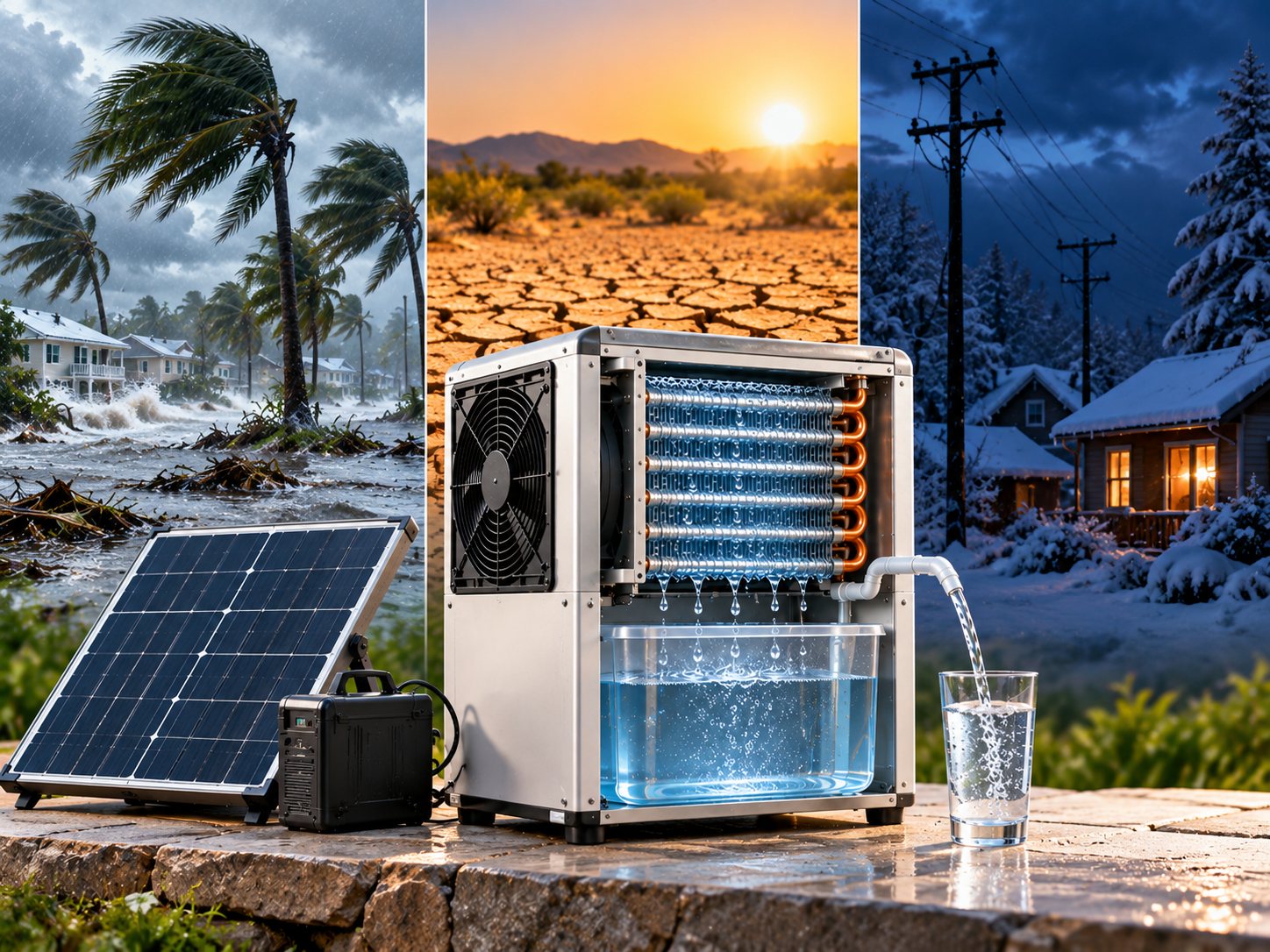
Hurricanes, floods, and severe storms frequently damage water treatment infrastructure or contaminate supply lines. In coastal and hurricane-prone regions, it's common for residents to be under boil-water advisories for days or weeks after a major storm.
A household with a working DIY atmospheric water generation setup isn't dependent on the timeline of municipal repairs. Because the system pulls moisture from ambient air rather than a pipe or treatment plant, it continues functioning as long as there's adequate humidity and a power source — even a small solar panel — to run it.
Scenario 2: Drought and Well Failures
For households on private wells, drought conditions can mean a well running low or dry entirely. Unlike rainwater collection, which is also drought-vulnerable, atmospheric water generation depends on ambient humidity rather than precipitation directly, which means it can continue producing at least some water even during dry spells — though output will still be lower in genuinely arid conditions.
This makes it a useful complementary source rather than a full replacement: households with wells often pair a DIY AWG setup with stored water reserves specifically to cover gaps during drought periods. A layered approach like this is detailed in our off-grid water backup guide for households.
Scenario 3: Extended Power Outages
Winter storms, grid failures, and regional blackouts can leave households without power for extended periods — which, for anyone relying on an electric well pump, also means no running water. A solar-compatible DIY water generation setup sidesteps this dependency, since it can run on independent power rather than the grid.
This is one of the more practical emergency use cases: a system that doesn't require the same infrastructure that just failed. Our Water Freedom System review covers the solar options included in the guide.
Scenario 4: Situations Where Tap Water Becomes Unsafe
Contamination events — whether from industrial spills, aging lead pipes, or agricultural runoff — periodically make headlines in cities and rural areas alike. When tap water becomes a health risk rather than a convenience issue, having an independent water source that never touched the compromised supply chain in the first place is a meaningful advantage.
It's worth noting that DIY AWG systems still benefit from basic filtration steps, and in areas with airborne industrial pollutants, an additional filtration or testing step is a sensible precaution — the point isn't that AWG water is automatically superior to all other sources, but that it comes from an entirely separate supply chain than a contaminated tap.
Why "DIY" Matters in an Emergency Context
There's a practical reason DIY-built systems appeal specifically to emergency-focused households, beyond just cost: understanding how your own system works means you can troubleshoot and repair it yourself. Commercial appliances that fail during a crisis often require a technician or replacement part that may not be available when you need it most. A system you built yourself, using commonly available parts, can typically be repaired with the same accessible materials.
This self-sufficiency angle is a recurring theme in off-grid and preparedness communities — it's not just about having a backup, but about not being dependent on anyone else to keep that backup running.
Setting Realistic Expectations
It's important to be upfront: a DIY atmospheric water generation system is not a guaranteed, unlimited water source, and it works best as part of a broader emergency plan rather than a standalone solution. Output depends on humidity, and very dry regions will see reduced performance. It's also a hands-on project — building it requires some time and basic effort, and results depend on following the build instructions carefully.
Where it earns its place in an emergency kit is as a renewable, infrastructure-independent layer that complements stored water and filtration — not as a replacement for either. Curious about realistic output by climate? Our AWG science breakdown explains what affects water output.
How to Integrate a DIY System Into Your Emergency Plan
- Build and test it before you need it. Emergencies are the wrong time to discover a construction mistake.
- Pair it with basic water storage. Use stored water for the first hours or days of an emergency, and let a DIY generation system supplement supply over a longer disruption.
- Plan your power source. A solar-compatible setup keeps the system functional during grid outages.
- Know your local climate's limitations. If you're in a drier region, plan indoor placement or timing strategies to maximize output during an emergency.
- Maintain it periodically, even when it's not actively needed, so it's ready to perform when a real emergency hits.
Final Thoughts
Emergency water planning is often treated as an afterthought compared to food and power, but water shortages tend to escalate faster and carry more immediate health risk. A DIY water generation system, built ahead of time and understood well by the household using it, adds a layer of resilience that doesn't depend on the same infrastructure most disasters tend to disrupt. It's not a magic fix — but as one part of a layered emergency water strategy, it's a genuinely practical tool for households serious about being prepared.
If you're considering adding this layer to your own plan, learn more about the Water Freedom System guide and check today's offer here, and pair it with the practical steps in our complete off-grid water backup tips.
Be Ready Before You Need To Be
Build it now, test it now — be prepared for the next advisory or outage.
See the Emergency-Ready Guide →Instant download · 60-day guarantee